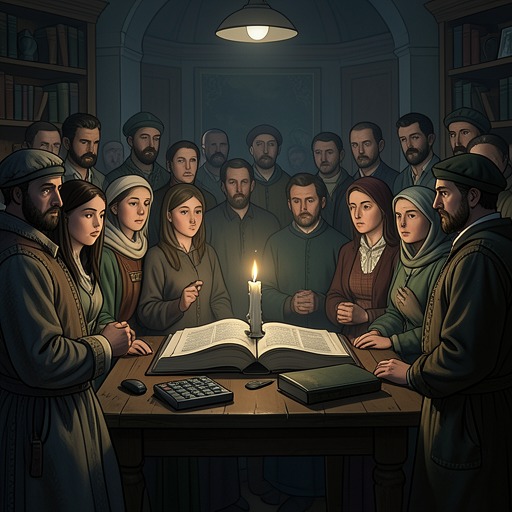
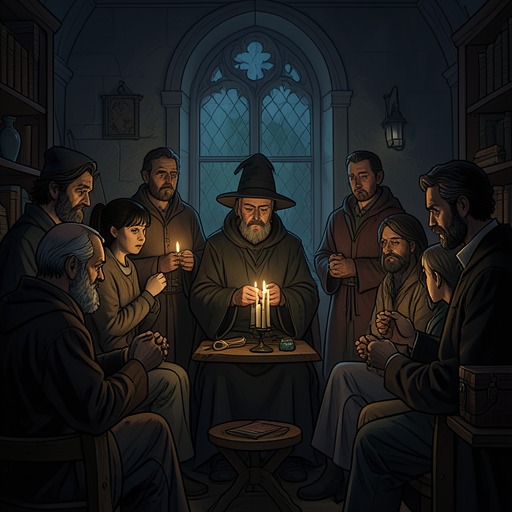
Let the Muggles manage without us!
The Tales of Beedle the Bard“Let the Muggles manage without us!” is the cry Dumbledore uses to characterize the growing withdrawal of wizards from their non-magical neighbours during the European witch-hunt era. More than a slogan of caution, it condenses a historical turn away from mutual aid: as persecution gathered pace, fear made contact seem dangerous, and separation eventually became a governing principle of wizarding life.
The cry of separation
Beedle’s plea for brotherly love toward Muggles was out of step with the dangers facing magical people in early fifteenth-century Europe. Persecution was intensifying, and some wizards considered even offering help with a neighbour’s sick pig tantamount to volunteering for the funeral pyre. Against that background, the cry to manage without Muggles expressed a defensive response to real danger, even as it widened the division between the two communities.
The withdrawal gathered force over time. As witch-hunts grew fiercer, wizarding families adopted double lives and used concealment charms to protect themselves and their families. By the seventeenth century, a witch or wizard who fraternized with Muggles could be treated as suspect or become an outcast within the magical community. The slogan belongs to this broader movement toward estrangement; it is not presented as an isolated remark by a named speaker.
From social division to secrecy
The separation culminated in the institution of the International Statute of Wizarding Secrecy in 1689. Wizardkind voluntarily went underground, turning a climate of fear and distrust into an enduring arrangement of concealment. The cry therefore points beyond individual choices about whether to help a neighbour: it anticipates a collective withdrawal that changed the relationship between magical society and Muggles.
That withdrawal also fed prejudice within the magical community. During the seventeenth century, pro-Muggle witches and wizards faced insults and the charge that their affection for non-magical company showed weak or inferior magic. The underlying suspicion eventually lost ground to evidence that some of the world’s most brilliant wizards were Muggle-lovers, but the hostility surrounding the slogan shows how social exclusion could be defended as a judgment about magical ability.
The slogan and Beedle’s fable
The cry helps explain why “The Wizard and the Hopping Pot” provoked resistance. In Beedle’s original story, a compassionate old wizard teaches his hardhearted son to recognize local Muggles’ misery; the son’s conscience awakens, and he agrees to use magic for the benefit of his non-magical neighbours. Dumbledore describes the tale as pro-Muggle and notes the irony that it presents the Muggle-loving father as superior in magic to his Muggle-hating son. Copies of the original version were often consigned to the flames.
By the middle of the sixteenth century, a different version was widely told in wizarding families. It discarded the pro-Muggle moral while keeping the grotesque Hopping Pot: in this revision, the Pot protects a wizard from hostile neighbours by chasing them away and consuming most of them. The wizard secures a promise from the surviving villagers to leave him in peace, then has the Pot release its victims. Some generally anti-Muggle parents still tell children only this revision, so the original can come as a surprise when they encounter it. The contrasting versions make the slogan’s logic visible: one story offers aid across the divide, while the other turns separation into a bargain enforced by fear.
Later disputes over the tale
The dispute over Beedle’s story was not limited to its pro-Muggle message. Beatrix Bloxam, author of Toadstool Tales, considered Beedle’s stories harmful to children because of their troubling subjects and rewrote several old tales, including some of his, to suit her ideal of innocent, happy reading. Her version of “The Wizard and the Hopping Pot” replaces the original’s encounter with village suffering with a cheerful tale of a little pot helping dolls recover. The transformation removes the moral conflict that made Beedle’s story a challenge to the sentiment expressed in “Let the Muggles manage without us!”